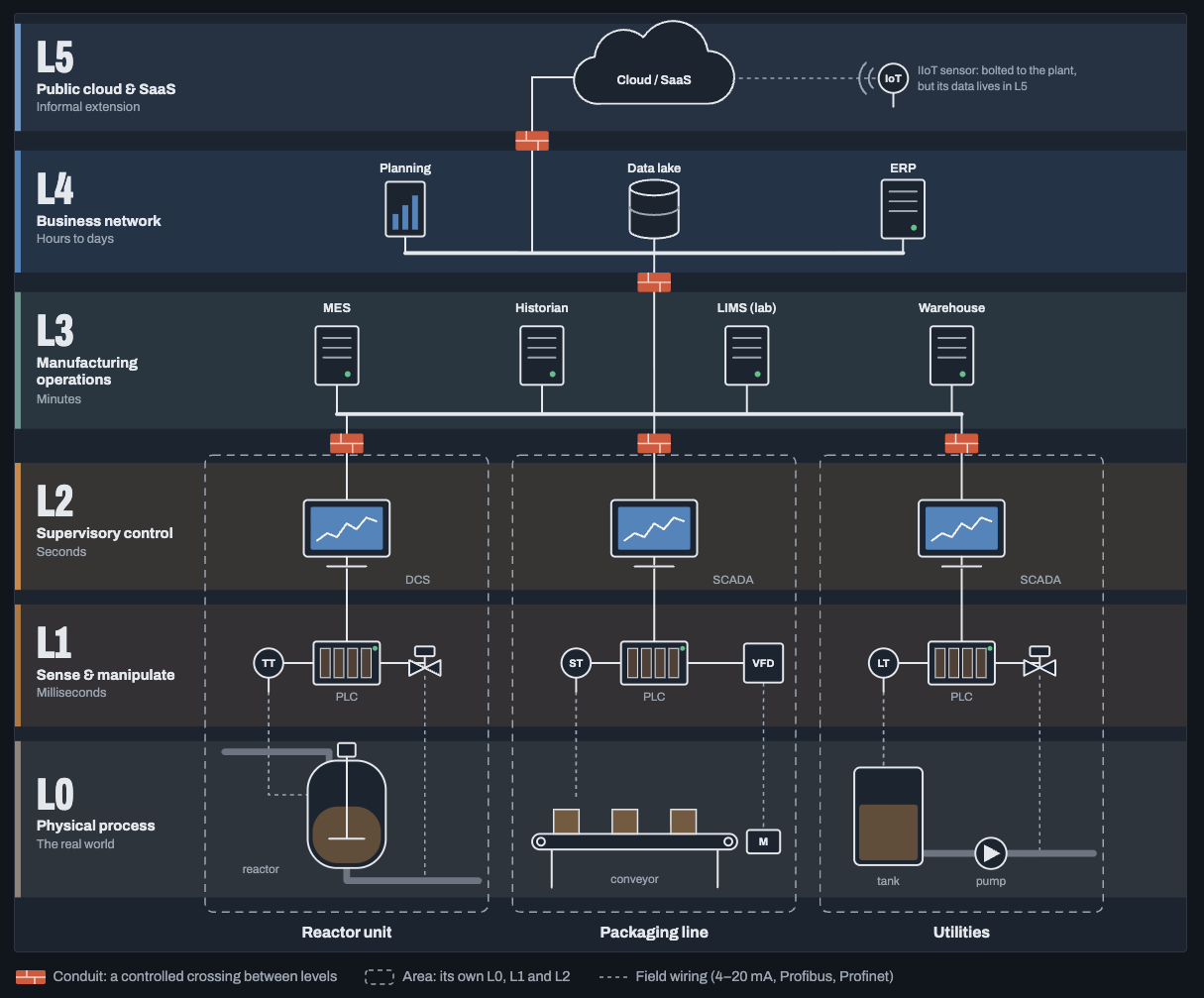
The Purdue Model for industrial control systems is a structured framework that categorizes industrial networks into hierarchical levels, ensuring secure and efficient data flow. This model helps organizations separate operational technology (OT) from enterprise IT systems, minimizing cybersecurity risks and improving system reliability.
The model consists of five levels: Level 0 (physical processes), Level 1 (sensors and actuators), Level 2 (supervisory control like SCADA), Level 3 (manufacturing operations such as MES), and Level 4 (enterprise IT, such as ERP and business intelligence systems). This structured approach prevents unauthorized access to critical production environments.
While the Purdue Model has been foundational for industrial automation and cybersecurity, modern challenges such as cloud computing, IIoT, and real-time analytics require adaptations to make the model more flexible and scalable.
Why it has lasted 30+ years:
- Common language. Vendor-neutral names for where every system sits.
- Isolation of levels. Each level has its own responsibilities, protocols and owners, which adds stability and security.
- Best practices. Once things have a name and a place, you can write rules for them, like never skipping a level.
Read more: Is the Purdue Model a Cyber Security model?